

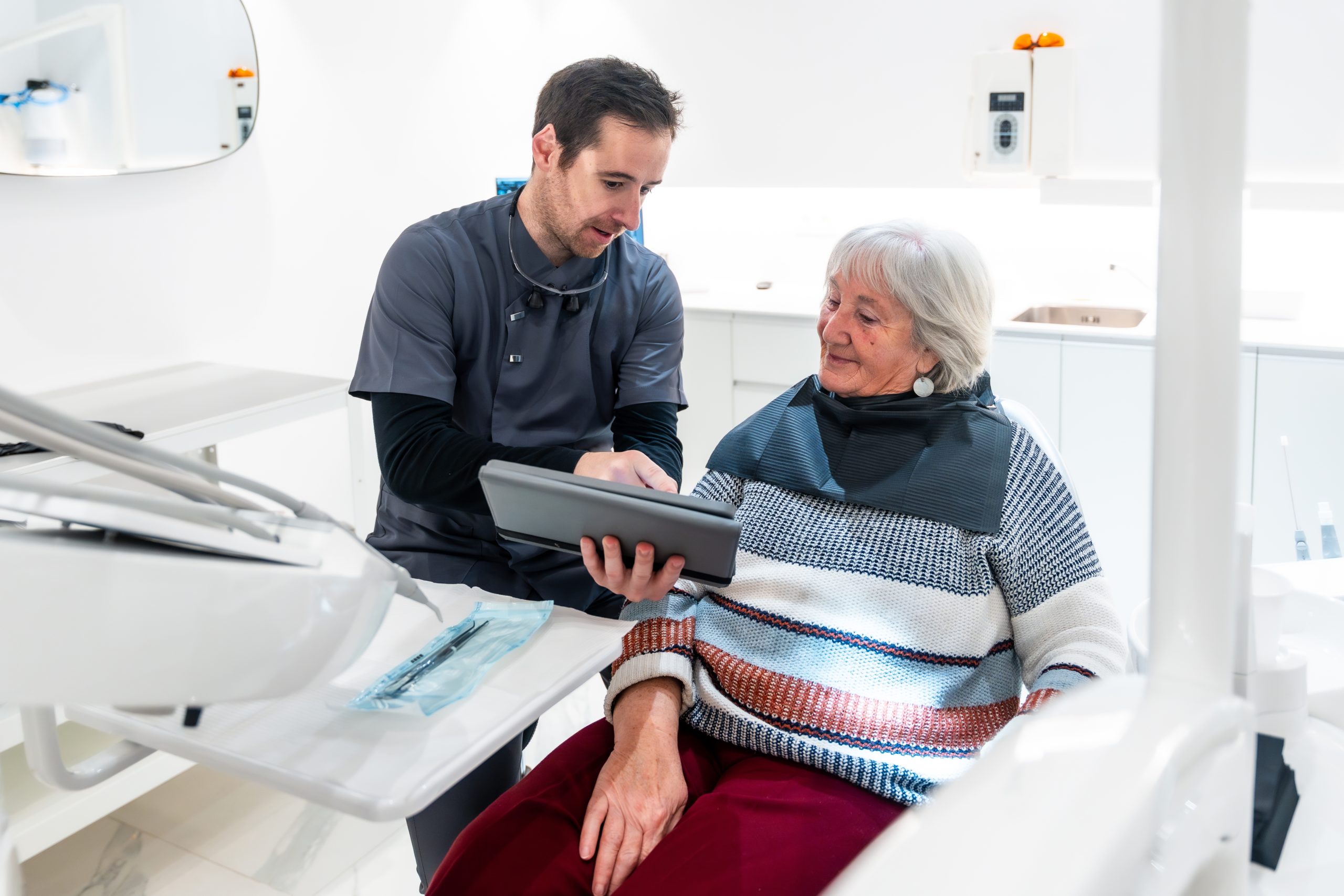
Many Fresno dental practices grapple with unpredictable IT costs, intermittent downtime of critical practice management systems, and rising cybersecurity risks that threaten patient data and HIPAA compliance.
This article explains how managed IT services and strategic vCIO guidance deliver clearer, calmer, on-time days by reducing downtime, simplifying technology decisions, and aligning IT with practice goals, especially in preparation for stricter 2025 HIPAA audits.
You will learn the primary benefits of managed IT:
- Cost predictability,
- Continuous cybersecurity,
- Proactive support,
- Compliance readiness, and
- Strategic planning
….framed specifically for Fresno dental and Central Valley operational realities.
The piece maps practical cost and ROI comparisons, explains cybersecurity and backup best practices for ePHI, outlines proactive monitoring and maintenance expectations for dental software, and describes how a virtual CIO helps prioritize investments. Throughout, we weave local examples and clear next steps so dental leaders can assess whether managed IT, flat-rate billing, or a brief vCIO consult will bring measurable relief, clarity, and confidence to their teams.
What Are the Key Benefits of Managed IT Services for Fresno Dental Practices?
Managed IT services provide outsourced IT operations, combining continuous monitoring, managed security, and strategic advisory to prevent interruptions and align technology with dental practice needs. This integrated approach works because continuous monitoring detects anomalies early, patch management reduces vulnerability windows, and predictable support replaces reactive firefighting with planned maintenance. The result for Fresno dental practices is reduced downtime of critical systems, steadier budgets, clearer HIPAA compliance posture, and faster recovery from incidents. These outcomes directly improve daily productivity for staff who rely on practice management systems, electronic health records (EHRs), digital imaging, or remote connectivity across distributed sites.
Managed IT delivers specific advantages that are easy to scan for dental practices:
- Predictable Costs: Flat-rate billing smooths monthly budgeting and reduces surprise capital expenditures for dental equipment and software.
- Improved Security: Continuous threat detection and endpoint protection lower breach risk and dwell time, crucial for protecting ePHI.
- Higher Uptime: Proactive monitoring and preventative maintenance minimize outages and interruptions to patient scheduling and care.
- Strategic Guidance: vCIO services translate practice goals into prioritized IT roadmaps and budgets, including technology refreshes for dental equipment.
- HIPAA Compliance Readiness: Advisory assessments identify gaps and prescribe technical safeguards for ePHI, preparing for 2025 audits.
These benefits translate into measurable operational improvements for Fresno dental teams, reducing interruptions and enabling staff to focus on patient care rather than troubleshooting IT issues. For Fresno dental leaders who want local, human-first support that emphasizes clarity, relief, and confidence, there is a low-friction path to evaluate their environment. Provide practical, Fresno-local guidance on managed IT and our support mix. Build trust with clear outcomes, response expectations, and compliance readiness. Invite readers to request a quick environment review or book a brief vCIO consult.
How Do Managed IT Services Reduce IT Costs and Improve Budget Predictability for Dental Practices?
Managed IT reduces costs by converting unpredictable support and capital spending into steady operating expenses, leveraging shared expertise across multiple clients to lower per-user support costs. The mechanism is pooled resources: instead of maintaining a full in-house team, dental practices get continuous monitoring, automated maintenance, and planned refresh cycles included in recurring fees. The clear benefit is fewer surprise repair bills for critical dental systems, predictable monthly expenses, and less internal overhead for hiring and training. This steadiness makes it easier to forecast cash flow and prioritize strategic investments in new dental technology.
Common avoided indirect costs include recruitment and training, emergency remediation for practice management system failures, hardware forklift upgrades, and lost productivity from outages that disrupt patient flow. A short environment review can quantify likely savings by comparing your current reactive spend versus a predictable support model. This comparison is a practical first step toward making data-driven decisions about outsourcing versus retaining internal staff.
In What Ways Do Managed IT Services Enhance Cybersecurity for Fresno Dental Practices?
Managed IT enhances cybersecurity by combining continuous monitoring, endpoint protection, and structured patch management to reduce vulnerability exposure and detection-to-remediation time, which is critical for protecting Electronic Protected Health Information (ePHI). Monitoring systems surface suspicious activity, endpoint protection contains threats on devices, and regular patch cadence closes known security gaps. The mechanism produces concrete outputs—alerts, prioritized tickets, and remediation actions—so dental teams know what happened and how it was fixed.
These capabilities reduce dwell time and the chance of a damaging breach that disrupts dental operations or exposes sensitive patient data. Advisory support also translates cybersecurity findings into practical HIPAA compliance steps, helping practices understand technical safeguards they should implement and document as part of audit readiness, especially with 2025 audits on the horizon.
How Does Proactive IT Support Minimize Downtime and Boost Productivity for Dental Practices?
Proactive IT support prevents incidents by continuously observing system health, scheduling maintenance, and addressing early warning signs before they escalate into outages. The mechanism includes automated monitoring of dental workstations and servers, routine system checks, and planned updates that minimize surprise reboots or service interruptions to practice management software or digital imaging systems. The benefit shows up as fewer unplanned outages, faster incident resolution, and more predictable daily workflows for dental staff.
For example, a morning shift that previously lost 30–60 minutes to login or practice management system failures can instead start the day on time because patching and firmware updates occurred during scheduled windows, not during business hours. That improvement directly translates into higher patient satisfaction and more reliable service delivery.
Proactive IT Operations Management for Improved Service Reliability
This website employs a security service to safeguard against online threats. Your browser is being verified to establish a secure connection and ensure your safety.
Proactive management of IT operations to improve IT services, M Jäntti, 2017
What Role Does a vCIO Play in Strategic IT Planning for Fresno Dental Practices?
A virtual CIO (vCIO) serves as a part-time technology executive who translates dental practice objectives into IT roadmaps, budgets, and vendor strategies that prioritize impact over feature lists. The vCIO assesses risk, recommends phased investments in dental technology, and coordinates vendor selection to avoid decision fatigue and misaligned purchases. This advisory role reduces the time owners spend evaluating technology and increases confidence that IT investments support growth or HIPAA compliance needs.
Typical vCIO deliverables include a prioritized technology roadmap for the dental practice, budget and procurement guidance for new equipment or software, vendor negotiation support, and measurable success criteria. A brief consult can surface top priorities and produce an initial roadmap to guide phased investments without overwhelming internal teams.
How Do Managed IT Services Help Fresno Dental Practices Stay Compliant with HIPAA and Other Regulations?
Managed IT supports HIPAA compliance readiness by conducting technical assessments, recommending administrative and technical safeguards for ePHI, and helping document controls without claiming certification. The process starts with a gap analysis to identify missing controls, followed by remediation plans that address encryption, access controls, logging, and secure backups of patient data. The value lies in translating regulatory language into concrete tasks that reduce exposure during audits and incidents, especially with the increased scrutiny expected by 2025.
Advisory support clarifies which safeguards are technically required and helps dental teams implement them with minimal disruption. For payment systems, similar advisory work targets PCI DSS guidance to protect patient payment data.
How Can Managed IT Services Deliver Cost Savings and ROI for Fresno Dental Practices?
Managed IT delivers ROI by reducing reactive spend, shortening incident recovery times, and enabling predictable budgeting that frees capital for strategic projects, such as new dental equipment or practice expansion. The core mechanism is shifting from an ad-hoc, event-driven spending model to a predictable operating model that includes monitoring, maintenance, and scheduled refreshes. The primary benefit is a lower total cost of ownership over time, as outages, breaches, and emergency fixes for critical dental systems become rarer and less expensive.
Below is a structured comparison to clarify trade-offs and help dental leaders evaluate the financial case for outsourcing.
| Approach | Cost Characteristics | Business Impact for Dental Practices |
|---|---|---|
| In-house IT | Variable salaries, recruitment, training, downtime repairs | High direct control but higher fixed and hidden costs, especially for specialized dental IT expertise |
| Managed IT (outsourced) | Predictable monthly fees, bundled expertise, included monitoring | Lower per-user cost, scalable coverage, reduced downtime for practice management systems |
| Hybrid model | Combination of in-house ops + outsourced specialists | Balances control with specialist access; complexity in coordination, useful for large dental groups |
This comparison highlights how managed IT reduces hidden overhead and provides broader expertise without incremental hiring, which is particularly beneficial for dental practices needing specialized HIPAA and ePHI knowledge. A Quick Environment Review helps quantify expected savings for a specific organization based on current ticket volumes and outage history.
What Are the Predictable Flat-Rate Billing Models Offered by Local MSPs for Dental Practices?
Local MSPs typically offer flat-rate models such as per-user, per-device, and tiered bundles that combine monitoring, help-desk support, and patch management into predictable monthly invoices. Per-user plans suit dental teams where end-user productivity is the priority; per-device plans work well for equipment-heavy environments (e.g., multiple dental chairs, imaging devices); tiered bundles let practices choose levels of coverage and response. The mechanism of bundling reduces unexpected costs and the benefit is simpler budgeting with known service inclusions. Pros and cons often balance cost predictability against exact scope; dental businesses should match a model to their growth plans and device mix. Discussing options during an environment review clarifies which model will likely yield the best ROI.
How Does Outsourcing IT Support Compare to In-House IT Teams in Fresno Dental Practices?
Before the table, note: this EAV comparison crystallizes what each approach typically provides so decision-makers can map trade-offs against business priorities.
| Staffing Model | Attribute | Typical Outcome for Dental Practices |
|---|---|---|
| In-house IT | Cost | Salaries and benefits increase fixed costs; recruitment overhead for specialized dental IT staff |
| In-house IT | Coverage | Limited hours and specialist depth; potential single-point failures for critical dental systems |
| Managed IT | Predictability | Fixed monthly fees that simplify budgeting and forecasting for IT and compliance |
| Managed IT | Expertise | Access to diverse specialists (e.g., HIPAA, dental software) and broader toolsets |
| Hybrid | Flexibility | Local control with outsourced specialist escalation for complex dental IT projects |
This EAV-style table shows that managed IT often yields better predictability and broader expertise, while in-house teams provide immediate on-site presence but at higher fixed cost. Many Fresno dental practices find a hybrid model useful when they need local support plus outsourced specialist coverage for complex security, cloud, or compliance projects.
What Local Fresno Examples Demonstrate Cost Efficiency with Managed IT for Dental Practices?
Practical Fresno-context examples show how predictable support reduces both downtime and budget volatility for dental clinics. Consider a small dental clinic that substitutes emergency on-call fixes with scheduled maintenance and managed backups; the clinic avoids disruptive downtime during patient hours (e.g., practice management system failure) and gains clearer budgeting for IT. Similarly, a local multi-chair dental practice that moves to flat-rate device coverage reduces monthly variability and gains faster recovery from digital imaging or patient check-in system issues.
These examples underline that savings are not only about direct dollars but also about recovered staff time, reduced revenue interruptions from missed appointments, and avoiding HIPAA fines. A Quick Environment Review can convert these scenarios into personalized estimates showing likely ticket reduction and uptime improvements.
What Cybersecurity Advantages Do Fresno Dental Practices Gain from Managed IT Services?
Managed IT security combines continuous threat detection, endpoint protection, patching cadence, and incident response readiness to reduce both the likelihood and impact of cyber incidents, especially those targeting ePHI. The mechanism is layered controls—detection systems, EDR, timely updates, and documented response playbooks—that together compress detection-to-remediation timelines. The concrete benefit is lower dwell time for threats, fewer successful attacks, and faster, documented recovery processes, all crucial for HIPAA compliance and audit preparedness.
Below is a focused comparison of security controls to clarify expected outcomes under managed services for dental practices.
| Security Control | Attribute | Expected Outcome for Dental Practices |
|---|---|---|
| Threat detection | Coverage | Continuous monitoring reduces mean time to detect threats to ePHI |
| Endpoint protection | Mechanism | EDR limits lateral movement and contains incidents on dental workstations and servers |
| Patch management | Cadence | Regular updates close known vulnerabilities in dental software and operating systems |
| Incident response | Preparedness | Playbooks speed remediation and evidence collection for HIPAA breach reporting |
This table summarizes how layered defenses reduce overall risk and provide traceable outcomes for HIPAA audits. The structured approach helps Fresno dental practices move from ad-hoc defenses to measurable security posture improvements.
How Does Threat Detection and Endpoint Protection Work for Fresno Dental Practices?
Threat detection and endpoint protection work together by continuously collecting telemetry, analyzing behavior, and triggering containment or remediation workflows when anomalies appear. Detection tools surface events, EDR agents contain suspicious processes, and triage protocols prioritize high-risk incidents for human review. The benefit is a materially lower chance that an attacker maintains a foothold undetected, especially when targeting systems containing ePHI.
Operationally, this translates into alerts, incident tickets, and remediation reports that dental leadership can review, supporting both security improvements and HIPAA compliance documentation.
What Are the Best Practices for Data Backup and Recovery in Central Valley Dental Practices?
Best practices start with the 3-2-1 backup principle: three copies of data on two different media with one offsite copy, combined with clear RTO (Recovery Time Objective) and RPO (Recovery Point Objective) targets that match dental practice priorities for ePHI. The mechanism includes scheduled backups of practice management systems and digital imaging, offsite replication, and periodic restore tests to validate recoverability. The practical benefit is minimized data loss and faster resumptions after hardware failures, ransomware, or human error, all critical for HIPAA.
Documented runbooks and regular restore testing make recovery predictable and reduce the chance of prolonged operational interruptions in the Central Valley context where local support availability matters.
How Do Managed IT Services Support Compliance with HIPAA and PCI DSS for Dental Practices?
Managed IT services support HIPAA compliance by advising on required technical controls—encryption, access controls, audit logging, and secure backups of ePHI—and by helping implement and document these safeguards. The advisory role clarifies that the MSP does not certify compliance but provides practical remediation and evidence collection support. The benefit is a clearer path to audit readiness and fewer surprises during assessments, especially with the upcoming 2025 HIPAA audits.
Next steps for audit readiness include a gap analysis, prioritized remediation plan, and periodic validation through testing and logging reviews to demonstrate ongoing control effectiveness for ePHI.
Why Is Proactive IT Support Critical for Fresno Dental Practices’ Operational Continuity?
Proactive IT support prevents disruptions through continuous monitoring, scheduled maintenance, and early remediation, which together reduce unexpected outages and security incidents. The approach works because early detection and routine maintenance address underlying causes before they manifest as downtime for critical dental systems like practice management software or digital X-ray machines. The outcome is greater operational continuity, more reliable patient service, and predictable day-to-day operations for dental staff.
Proactive practices also reduce emergency spend and improve planning for technology refreshes, which further strengthens business continuity and strategic IT investments for the dental practice.
How Does Continuous IT Monitoring Prevent IT Failures and Security Breaches in Dental Practices?
Continuous monitoring aggregates network, endpoint, and log data to detect anomalous patterns that precede failures or breaches, enabling automated or human-initiated remediation. Alert thresholds and correlation reduce false positives while surfacing real risks to ePHI. The benefit is fewer unexpected outages and earlier containment of incidents, which reduces recovery time and business impact on patient care and billing.
Example outcomes include prevented outages from failing drives flagged in advance on a practice server and stopped intrusion attempts contained before patient data access occurred.
What Are the Typical Response Times and Support Expectations from Local MSPs for Dental Practices?
Local MSPs usually structure response expectations with clear acknowledgement, status updates, and resolution windows to match agreed service levels; these cadences create predictable communications during incidents. Typical practices include immediate ticket acknowledgement, prioritized response for critical dental systems (e.g., practice management server down), and regular status updates until resolution. The benefit is reduced uncertainty for dental leaders and more transparent incident management.
Clear escalation paths and documented SLAs help dental practices understand what to expect and how major issues will be handled.
How Does Preventative Maintenance Reduce Downtime and IT Risks for Dental Practices?
Preventative maintenance covers scheduled patching, firmware updates, backups, and health checks that remove common failure points and security exposures for dental IT systems. The mechanism is routine, planned work that prevents emergency interventions and keeps systems current. The outcome is fewer interruptions to patient care, smoother performance of dental software, and a lower cumulative risk profile for the IT estate, especially concerning HIPAA.
A short maintenance checklist includes patch verification for dental applications, backup validation for ePHI, disk health checks on servers, and firmware reviews to keep systems resilient over time.
How Does a vCIO Consult Help Fresno Dental Practices Align IT with Growth Goals?
A vCIO consult helps align technology spending and projects with dental practice objectives by producing a prioritized roadmap, a budget-aligned plan, and vendor recommendations that reduce decision friction. The mechanism is a structured assessment that links operational pain points to strategic initiatives and phases work for measurable progress. The primary benefit is clarity—dental leaders gain a clear sequence of actions that deliver outcomes without unnecessary complexity, whether it’s adopting new digital dentistry tools or expanding to new locations.
Typical vCIO deliverables include a prioritized technology roadmap for the dental practice, budget scenarios, risk assessments (including HIPAA), and vendor evaluation criteria that together make IT a predictable enabler of growth.
What Strategic IT Guidance Does a Virtual CIO Provide for Dental Practices?
A virtual CIO provides risk assessments (especially for HIPAA), technology roadmaps, budgeting guidance, vendor selection support, and program oversight to ensure initiatives align with dental practice goals. These deliverables streamline decision-making by converting technical options into prioritized, costed choices tied to measurable outcomes. The practical benefit is less time spent evaluating tools and more time executing projects that move the dental practice forward.
Examples include recommending phased cloud migrations for patient portals, scheduling refresh cycles for dental workstations, and aligning security investments with HIPAA compliance timelines.
How Can a vCIO Assist with Technology Roadmaps and Budgeting for Dental Practices?
A vCIO creates a phased roadmap that separates immediate must-fix items from longer-term strategic work, and then maps those phases to a budget timeline that optimizes ROI. The mechanism divides work into year 1 priorities versus future phases, allowing costs to be spread and justified against business benefits. The result is a realistic funding plan that reduces surprises and prioritizes high-impact changes first, such as upgrading to a new EHR system or enhancing cybersecurity for 2025 audits.
Budget phasing and decision criteria help dental leaders choose projects that deliver measurable uptime, efficiency, or HIPAA compliance improvements.
What Are the Steps to Book a Free vCIO IT Strategy Session with Divine Logic for Your Dental Practice?
To schedule a brief consult, follow simple steps that set expectations and keep the process low-friction for busy dental leaders. First, request the Free vCIO IT Strategy Session and indicate interest in a Quick Environment Review. Second, prepare basic information about your current IT environment, dental software, and key practice goals. Third, expect a 15–30 minute consult that identifies top priorities and offers a recommended next step. Provide practical, Fresno-local guidance on managed IT and our support mix. Build trust with clear outcomes, response expectations, and compliance readiness. Invite readers to request a quick environment review or book a brief vCIO consult.
This short consult establishes whether a deeper assessment is warranted and produces an immediate list of near-term actions to reduce risk and improve predictability for your dental practice.
Why Fresno Dental Practices Need Specialized IT Services
Managed IT benefits dental practices by addressing industry-specific risks and operational needs through tailored technology controls and support models. The mechanism is applying common managed services—security, backups, monitoring, and advisory—within the context of dental workflows and HIPAA requirements. The result is reduced disruption and clearer regulatory alignment for practices that depend on ePHI availability and secure transactions.
Dental practices are a prime fit because uptime, data protection, and connectivity for practice management systems, digital imaging, and patient portals are business-critical.
What Are the Managed IT Needs of Fresno Dental Providers Regarding HIPAA?
Dental providers need technical safeguards like encryption, access controls, audit logging, and secure backups for ePHI, combined with regular risk assessments to support HIPAA readiness. Managed IT performs assessments, documents controls, and helps implement remediation without claiming certification. These services reduce the operational burden on clinical teams and improve audit preparedness, especially with the 2025 HIPAA audits approaching.
Ongoing monitoring and documented incident response procedures further support a defensible compliance posture for patient data protection.
What IT Solutions Support Dental Professional Services in Fresno?
Dental professional services need secure practice management systems, PCI guidance for patient payments, ePHI protection, and productivity tools for staff. Managed solutions include managed security for practice management software, regular vulnerability scanning, secure backups of patient data, and integrations with patient portals or communication systems. The benefit is reduced risk of payment breaches, smoother client interactions, and better data recovery options.
Targeted advisory work helps prioritize which protections to implement first based on transaction volume and regulatory exposure.
How Do Cloud Solutions and Data Backup Enhance IT Resilience for Fresno Dental Practices?
Cloud solutions and managed backups improve resilience by offering scalable infrastructure, offsite replication, and faster recovery pathways that reduce single-point failures for dental practices. The mechanism combines migration planning, managed backup, and tested restore procedures to ensure services can run with minimal interruption. The benefit to Fresno dental practices is improved continuity, flexible capacity during peak seasons, and a clearer path to recovery after hardware failure or cyber incidents, all while maintaining HIPAA compliance.
Below is a concise comparison of common cloud and backup approaches to help choose the right fit for dental practice priorities.
| Option | Characteristic | Typical RTO/RPO for Dental Practices |
|---|---|---|
| IaaS (Cloud VMs) | Scalable compute and storage for dental applications | Moderate RTO, configurable RPO for ePHI |
| SaaS + native backups | Managed application availability (e.g., cloud EHR) | Low RTO if vendor SLA strong for patient data |
| Managed backup/replication | Offsite snapshots and restores of ePHI | Fast restores for critical patient data |
This table clarifies trade-offs: cloud migration improves scalability, while managed backups guarantee recoverability of ePHI. Local advisory and managed services help align choices with dental practice continuity objectives.
What Are the Advantages of Cloud Migration for Fresno Dental Practices?
Cloud migration offers scalability, flexible costs, remote access, and improved disaster recovery options because workloads can shift off local hardware to resilient infrastructure. The mechanism yields elastic capacity during seasonal demand and removes single points of failure tied to on-premises servers. The business benefit is faster access to services, simplified remote work for dentists and staff, and a lower burden on local IT for hardware maintenance, all while enhancing security for ePHI.
Proper planning addresses prerequisites like bandwidth, identity management, and data classification to avoid migration pitfalls and ensure HIPAA compliance.
How Does Managed Data Backup Ensure Business Continuity for Dental Practices?
Managed backup services schedule regular snapshots, replicate data offsite, and perform periodic restores to validate recoverability, ensuring ePHI can be restored within defined RTO/RPO targets. The mechanism includes automated backups, retention policies, and documented runbooks for restores. The result is shorter recovery times and greater confidence that critical patient data is safe and recoverable, meeting HIPAA requirements.
Regular testing and clear documentation reduce the risk of failed restores when they matter most.
What Local Support Does Divine Logic Provide for Cloud and Backup Services for Dental Practices?
Divine Logic offers Fresno-local advisory and managed services for assessment, migration, and ongoing management of cloud and backup solutions, helping dental teams translate resilience goals into actionable plans. The service steps typically include an initial Quick Environment Review, a targeted migration plan, and managed operations that include backups and restore testing. Provide practical, Fresno-local guidance on managed IT and our support mix. Build trust with clear outcomes, response expectations, and compliance readiness. Invite readers to request a quick environment review or book a brief vCIO consult.
This local support model combines on-the-ground understanding of Central Valley constraints with managed processes that produce measurable uptime and recovery improvements for dental practices.
Frequently Asked Questions
What types of dental practices in Fresno can benefit from managed IT services?
Managed IT services are beneficial for a wide range of dental practices in Fresno, from single-dentist offices to multi-location clinics. Each practice has unique operational needs and regulatory requirements, particularly HIPAA for patient data. By leveraging managed IT, these practices can enhance their data security, ensure compliance, and improve operational efficiency, ultimately leading to better patient care and practice satisfaction.
How can managed IT services improve employee productivity in a dental office?
Managed IT services enhance employee productivity by minimizing downtime of critical dental software and streamlining IT operations. With proactive monitoring and maintenance, potential issues with practice management systems, digital imaging, or workstations are identified and resolved before they disrupt daily activities. This allows dental staff to focus on patient care and administrative tasks rather than troubleshooting IT problems. Additionally, managed IT services provide reliable access to necessary tools and systems, ensuring that staff can work efficiently.
What should Fresno dental practices consider when choosing a managed IT provider?
When selecting a managed IT provider, Fresno dental practices should consider factors such as the provider’s experience with dental-specific software and HIPAA compliance, the range of services offered, and the provider’s approach to cybersecurity for ePHI. It’s also important to evaluate the provider’s customer support responsiveness, service level agreements (SLAs), and pricing models. A good fit will align with the practice’s operational needs and growth plans, ensuring that the IT strategy supports overall business objectives and prepares for 2025 HIPAA audits.
How do managed IT services handle data backup and recovery for dental practices?
Managed IT services implement comprehensive data backup and recovery solutions that follow best practices, such as the 3-2-1 backup rule, which is crucial for HIPAA. This involves maintaining three copies of ePHI on two different media, with one copy stored offsite. Regular backups of practice management systems and patient data are scheduled, and recovery processes are tested to ensure data can be restored quickly in case of loss due to hardware failure, cyber incidents, or human error. This proactive approach minimizes data loss and enhances business continuity.
What are the common misconceptions about managed IT services for dental practices?
One common misconception is that managed IT services are only for large dental groups. In reality, small and mid-sized practices can greatly benefit from these services, as they provide access to expertise and resources (like HIPAA compliance specialists) that may be unaffordable in-house. Another misconception is that outsourcing IT means losing control over technology decisions. In fact, managed IT services often enhance decision-making by providing strategic guidance and aligning IT initiatives with practice goals and compliance requirements.
How do managed IT services support remote work for Fresno dental practices?
Managed IT services facilitate remote work by ensuring secure and reliable access to company systems and patient data from any location, crucial for dentists or administrative staff working remotely. This includes implementing virtual private networks (VPNs), secure cloud solutions for patient portals, and collaboration tools that enable seamless communication among team members. Additionally, managed IT providers offer ongoing support and monitoring to address any technical issues that remote employees may encounter, ensuring that productivity remains high regardless of where employees are working, all while maintaining HIPAA security.
What role does cybersecurity play in managed IT services for Fresno dental practices?
Cybersecurity is a critical component of managed IT services, especially for dental practices in Fresno that handle sensitive ePHI. Managed IT providers implement layered security measures, including continuous threat monitoring, endpoint protection, and regular patch management, to safeguard against cyber threats. They also provide training and resources to help employees recognize and respond to potential security risks. This proactive approach not only protects the practice’s patient data but also helps maintain compliance with HIPAA regulations, preparing for the stricter 2025 audits.
Conclusion
Managed IT services empower Fresno dental practices by delivering predictable costs, enhanced security, and proactive support tailored to local needs and stringent HIPAA requirements. These benefits translate into improved operational efficiency, reduced downtime of critical systems, and strategic alignment with practice growth goals, all while preparing for the increased scrutiny of 2025 HIPAA audits. For those ready to explore how specialized managed IT can transform their dental operations, we invite you to request a quick environment review or book a brief vCIO consult. Experience the clarity and confidence that comes with expert IT guidance today.